
A move within Central Florida can look simple on a map and feel very different once the school run, grocery trip, and Friday night plans begin. In the conversation around Saint Cloud versus Orlando suburbs, the real question is less about which place is better and more about what kind of everyday life you want to build.
Saint Cloud offers a distinct home base within reach of Orlando jobs, Lake Nona, theme parks, and the airport. Many neighboring communities offer their own advantages, from newer master-planned neighborhoods to closer-in commutes. The right choice depends on your household’s schedule, budget, preferred home style, and how much you value local connection outside the front door.
Saint Cloud versus Orlando suburbs: the daily feel
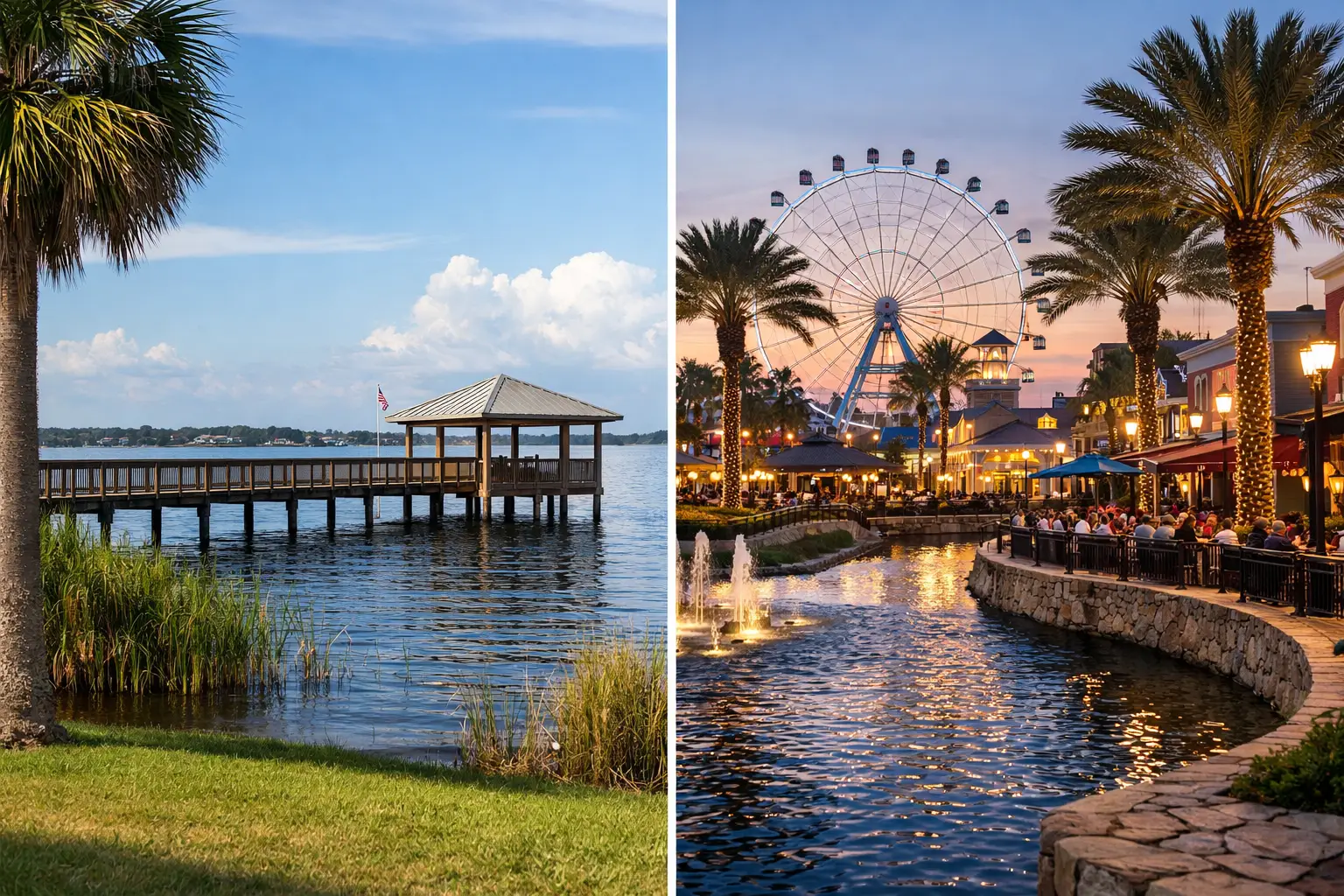
Saint Cloud has a recognizable sense of place. Its historic downtown, local restaurants, community gatherings, and Lake Tohopekaliga shoreline give residents reasons to stay nearby on a weekend. It is a city with room to grow, but it still carries the feeling that neighbors run into one another at an event, a park, or a favorite local spot.
That matters for families and newcomers who want more than a subdivision near a major road. A Saturday can include a downtown breakfast, time near the lake, youth sports, and an evening event without needing a detailed Orlando itinerary. For local business owners, that same community rhythm can create repeat customers and stronger word-of-mouth connections.
“Orlando suburbs” is a broad label, though. Lake Nona has a polished, newer, employment-centered feel. Kissimmee offers a large and diverse selection of established neighborhoods, services, and visitor-area access. Communities in southeast Orlando can place residents nearer to key employment centers, while other outlying areas may provide more land or newer construction. Each comes with a different pace, road network, and mix of local amenities.
Saint Cloud tends to appeal to people who want access to the metro area without making the metro area their entire identity. If you picture your free time around lake views, hometown events, independent businesses, and a growing downtown, that distinction can be meaningful.
Commute access is about your actual schedule
For many relocating households, the commute is the deciding factor. Saint Cloud is well positioned for people traveling along the Florida Turnpike corridor and for many workers connected to Lake Nona Medical City, Orlando International Airport, and parts of east and southeast Orlando. But proximity on a map does not guarantee an easy drive at 7:30 a.m.
A home closer to Narcoossee Road or a convenient Turnpike entrance can change the experience considerably. So can your destination, shift time, school drop-off routine, and comfort with toll roads. A household commuting to Lake Nona may find Saint Cloud highly practical, while someone whose daily destination is downtown Orlando, Winter Park, or west Orlando may prefer a location farther north or west.
Before choosing a community, test the route during the hours you would actually use it. Run a weekday morning and evening estimate from a specific address, not just the city name. Check whether your route depends on a single busy corridor and whether you have a realistic backup option. Also factor in errands. A slightly longer work commute may be worthwhile if your home is close to the parks, grocery stores, schools, and services you use most often.
For remote and hybrid workers, the equation changes. If you only travel to the office once or twice a week, Saint Cloud’s quieter residential feel and outdoor access may carry more weight than shaving a few miles from a daily commute.
Homes, neighborhoods, and room to choose
Saint Cloud has a wide housing story. You can find established neighborhoods with mature trees and a more settled feel, homes closer to downtown, waterfront-adjacent areas, townhomes, and expanding new-construction communities. That variety lets buyers compare not only price and square footage, but also lot size, HOA structure, amenities, and how connected a neighborhood feels to the rest of the city.
Newer communities can be especially attractive for households seeking contemporary floor plans, energy-efficient features, community pools, playgrounds, or planned trails. The trade-off is that construction activity and future development may be part of the picture for several years. Established areas may offer more immediate character and a lived-in streetscape, though home updates and maintenance needs can vary.
Across Orlando-area suburbs, the choices can be just as broad, but the value proposition shifts. Some communities offer a denser, more amenity-driven lifestyle. Others may have homes closer to major employers but smaller lots or more traffic. A lower purchase price in one area may be offset by tolls, HOA fees, insurance, commute costs, or the need for more frequent driving to reach the places your family enjoys.
The most useful comparison is not city against city. Compare individual neighborhoods against your nonnegotiables. Consider the home itself, but also ask what is within a 10- to 15-minute drive. Is there a practical grocery option? A place for kids to play? A restaurant you would genuinely visit? A route that works when the weather is bad or traffic is heavier than usual?
Lake life and local recreation are a real advantage
Saint Cloud’s relationship with the water is one of its clearest differentiators. East Lake Tohopekaliga and Lake Tohopekaliga are part of the area’s everyday scenery and recreation culture, not just a backdrop for listing photos. Boating, fishing, walking near the water, birdwatching, and relaxed outdoor time give residents an easy way to reset without heading into Orlando.
For families, this can mean a more varied weekend routine. For visitors, it offers a side of Central Florida that feels different from resort corridors and major attractions. Saint Cloud also has parks, local activities, and community events that make it easier to find something close to home.
Other Orlando suburbs may have excellent parks, trails, pools, and neighborhood amenities. Some are more walkable to retail or entertainment districts. Still, not every community has the same natural waterfront presence or the sense that outdoor recreation is woven into the city’s identity. If being near the lake is a priority rather than an occasional treat, Saint Cloud deserves a close look.
Schools, services, and the practical details
School needs are personal, and boundaries, programs, transportation options, and enrollment conditions can change. Families should verify the assigned school for a specific address and look beyond a single rating. Visit the campus when possible, ask about programs that matter to your child, and understand the daily transportation plan before committing to a neighborhood.
The same practical approach applies to health care, childcare, fitness, shopping, and pet services. Saint Cloud continues to add options as the community grows, while Lake Nona and other nearby areas may offer faster access to certain major medical, retail, or employment destinations. Decide which conveniences need to be five minutes away and which ones are acceptable as a planned drive.
It is also worth paying attention to the social side of settling in. A neighborhood can have beautiful homes and excellent amenities yet feel isolated if there are few natural ways to meet people. Saint Cloud’s downtown, local organizations, independent businesses, and community calendar provide multiple entry points for newcomers who want to participate rather than simply reside nearby.
Who may feel most at home in Saint Cloud?
Saint Cloud can be an especially strong fit for households that want a quieter home base, growing neighborhood options, and a community where local life is easy to find. It works well for people connected to Lake Nona or the Turnpike corridor, for buyers who value lake access, and for families looking for a more hometown-centered rhythm while remaining within reach of Orlando’s larger employment and entertainment options.
A different Orlando suburb may be the better choice if your top priority is the shortest possible commute to a specific office, immediate access to a particular retail district, or a highly urbanized, amenity-dense environment. There is no prize for choosing the trendiest ZIP code if the daily logistics do not support your household.
The best way to decide is to spend time in both places as a resident would. Drive the commute, eat somewhere local, visit a park, check the route to school, and return after dark. Then picture an ordinary Tuesday, not just a sunny Saturday. When the details feel comfortable and the community feels welcoming, you have found more than a convenient address. You have found a place to connect.



0 Comments